
Under the Sun · Outside in SWFL
Slow Down in the Woods
A walk through Six Mile Cypress Slough Preserve, where slowing down turns a quiet boardwalk into a bird-by-bird, bloom-by-bloom Southwest Florida education.

By Lloyd Duhon
May 7, 2026 · 6 min read
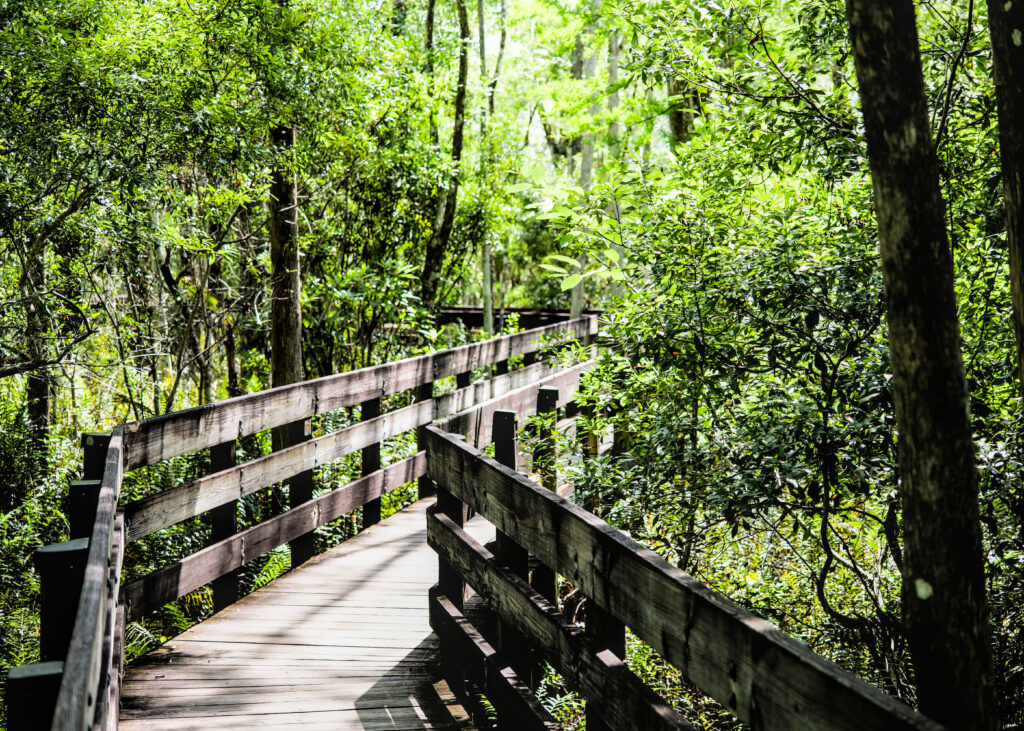
Walking through the woods can seem quiet, almost monotonous. That is, until you slow down. Stand still on a boardwalk plank in Fort Myers for thirty seconds and the woods stop hiding from you — a heron uncoils from the reeds, a limpkin works the lily pads, a squirrel forgets you’re there.
Six Mile Cypress Slough Preserve is 3,500 acres of intermingled wetland and upland tucked behind I-75 in Fort Myers, with a 1.2-mile boardwalk that loops you through cypress strand, marsh, and pond. Admission is free. Parking is a dollar an hour, five bucks max. The whole place exists because a group of high school students refused to let it be paved over in 1976 — they petitioned door to door for a tax increase to buy and protect it, and Lee County voters said yes.
That story matters, because the slough is what happens when a community decides a place is worth keeping quiet.
Section 01 — The Boardwalk
A short loop that asks you to take your time.
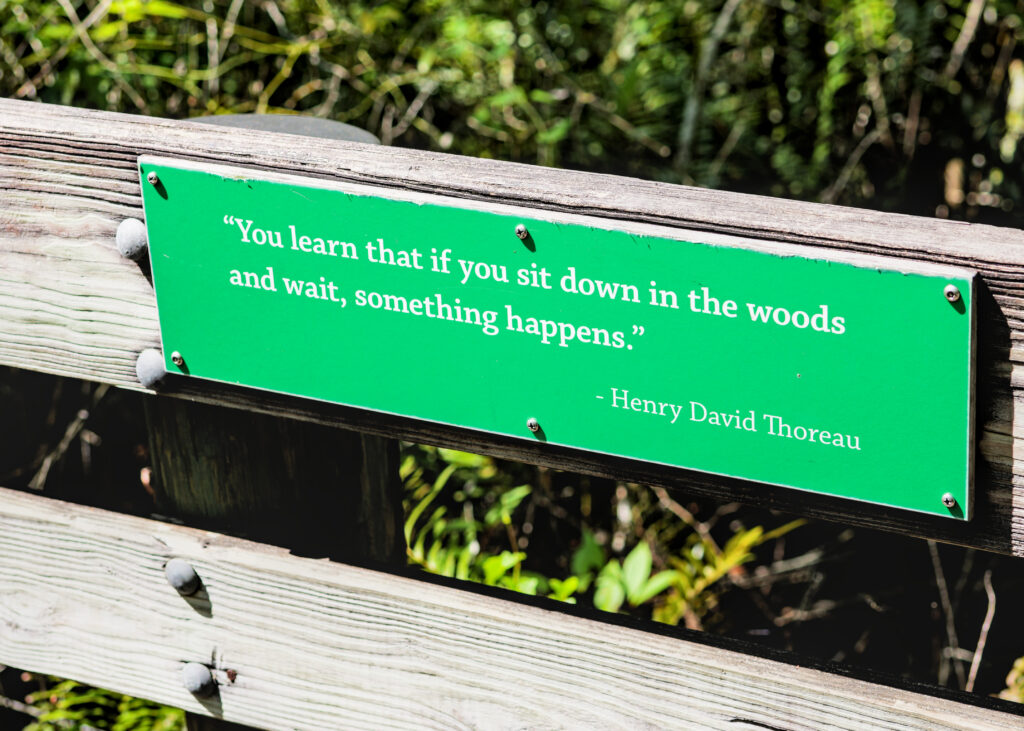
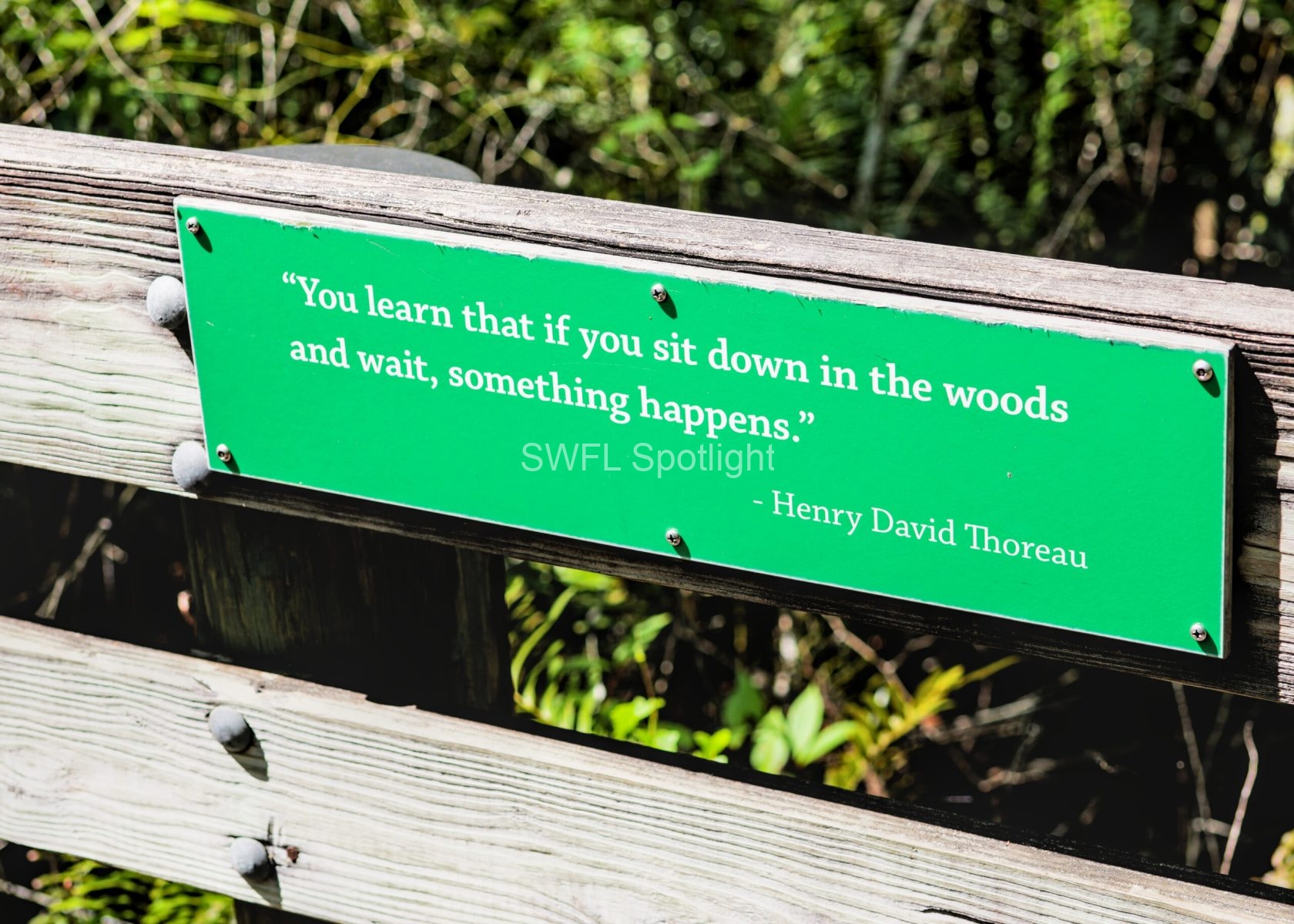
There’s a small green sign screwed to one of the railings about a third of the way around the loop. White lettering on a green plate, easy to miss if you’re walking briskly:
You learn that if you sit down in the woods and wait, something happens.
— Henry David Thoreau
It reads like a gentle dare. Most visitors blow past it on the way to the next observation deck. The ones who stop — who lean on the railing and just listen — get the whole point of the place handed to them in five minutes.
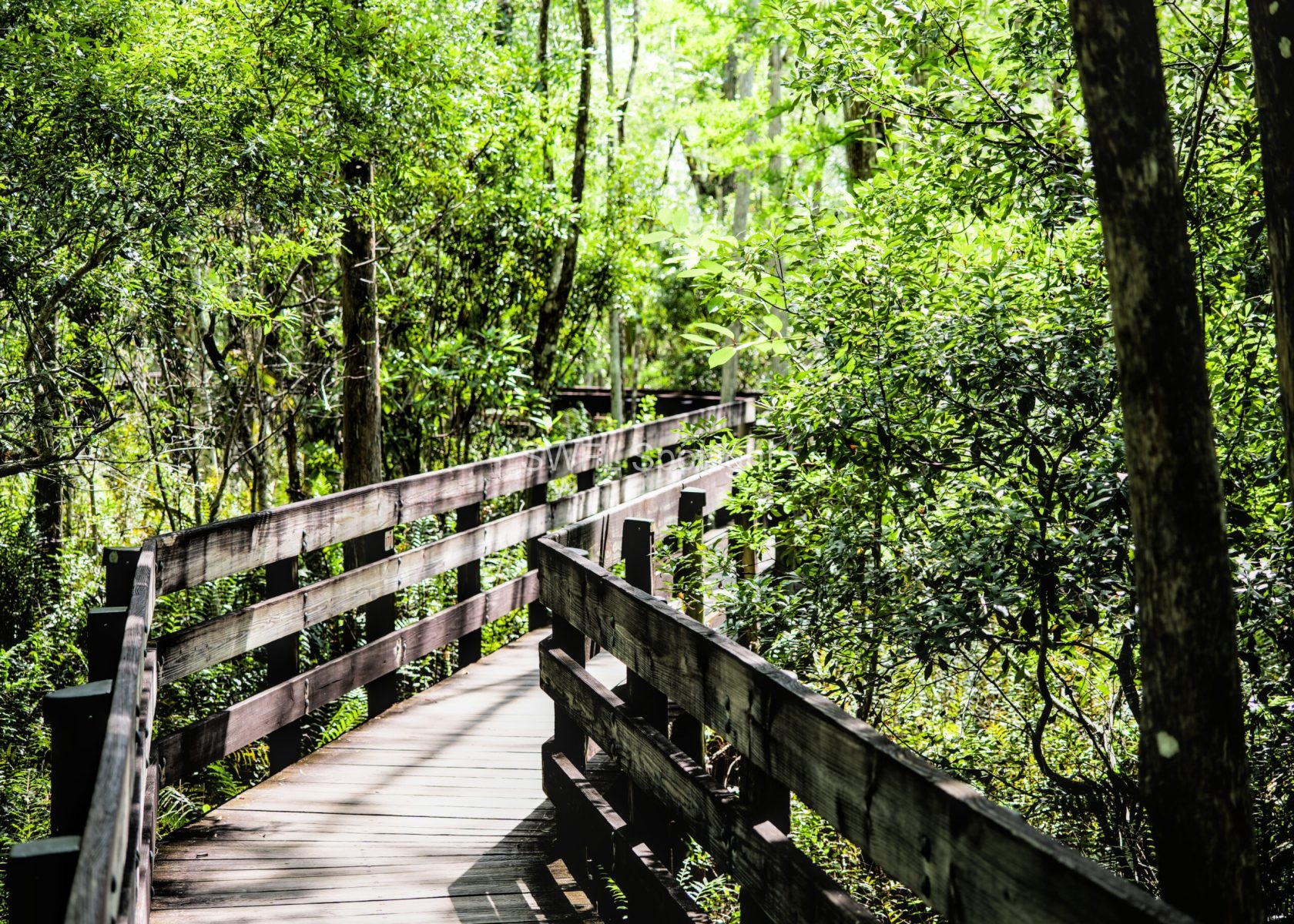
The boardwalk is built low and narrow, threading between cypress knees and dropping you eye-level with whatever’s working the water. Two loops, several observation decks, a photo blind, and benches at intervals — built for the patient, not the hurried.
Most visitors blow past the sign on the way to the next observation deck. The ones who stop get the whole point of the place handed to them in five minutes.
If you go on a weekday morning before the school groups arrive, you can walk a full quarter-mile without seeing another person. The cypress canopy holds the heat down, the dragonflies cruise the rails, and the slough does what it has done for centuries — slowly, slowly moving water south.
Section 02 — Who You’ll Meet at the Water
The big birds work the lily pads while you watch.
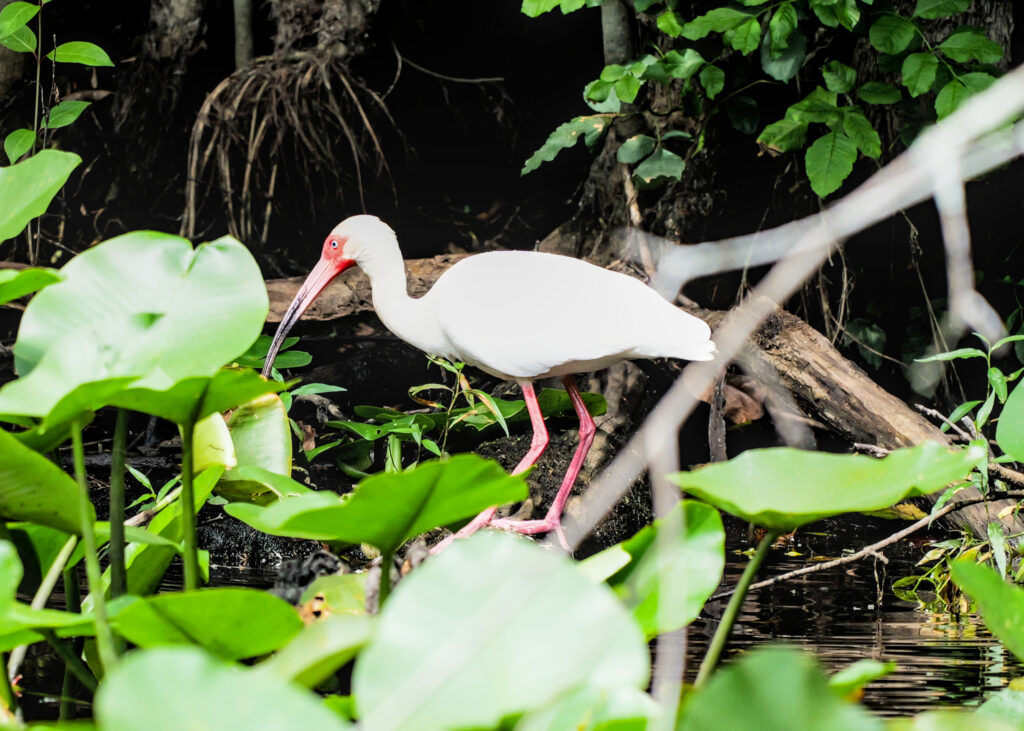
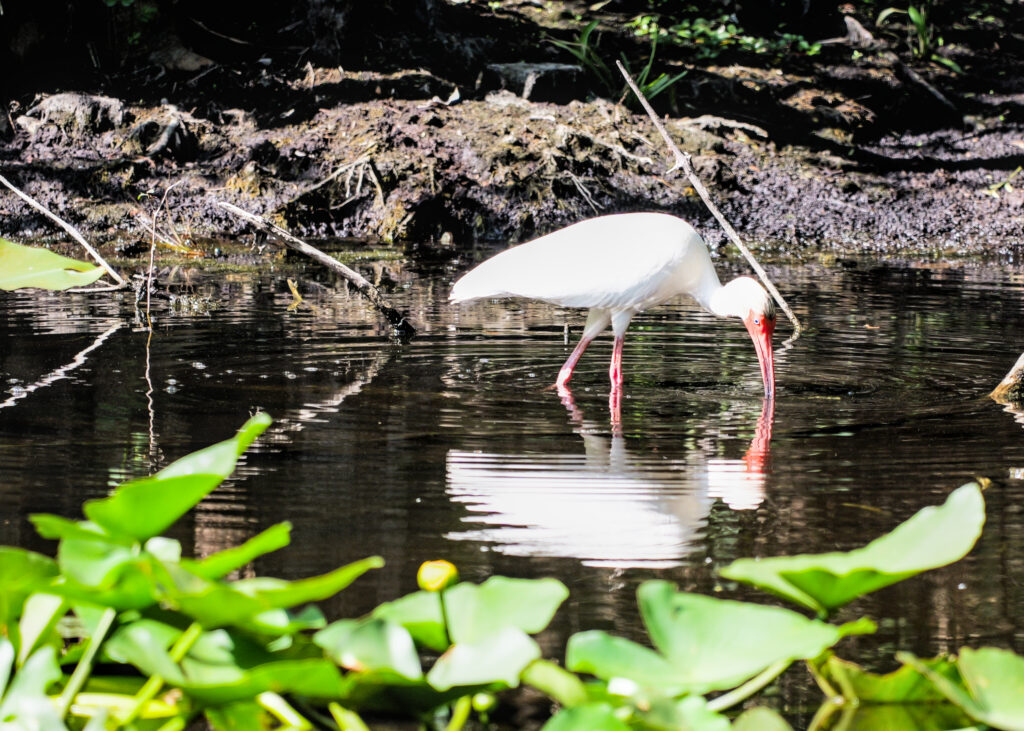
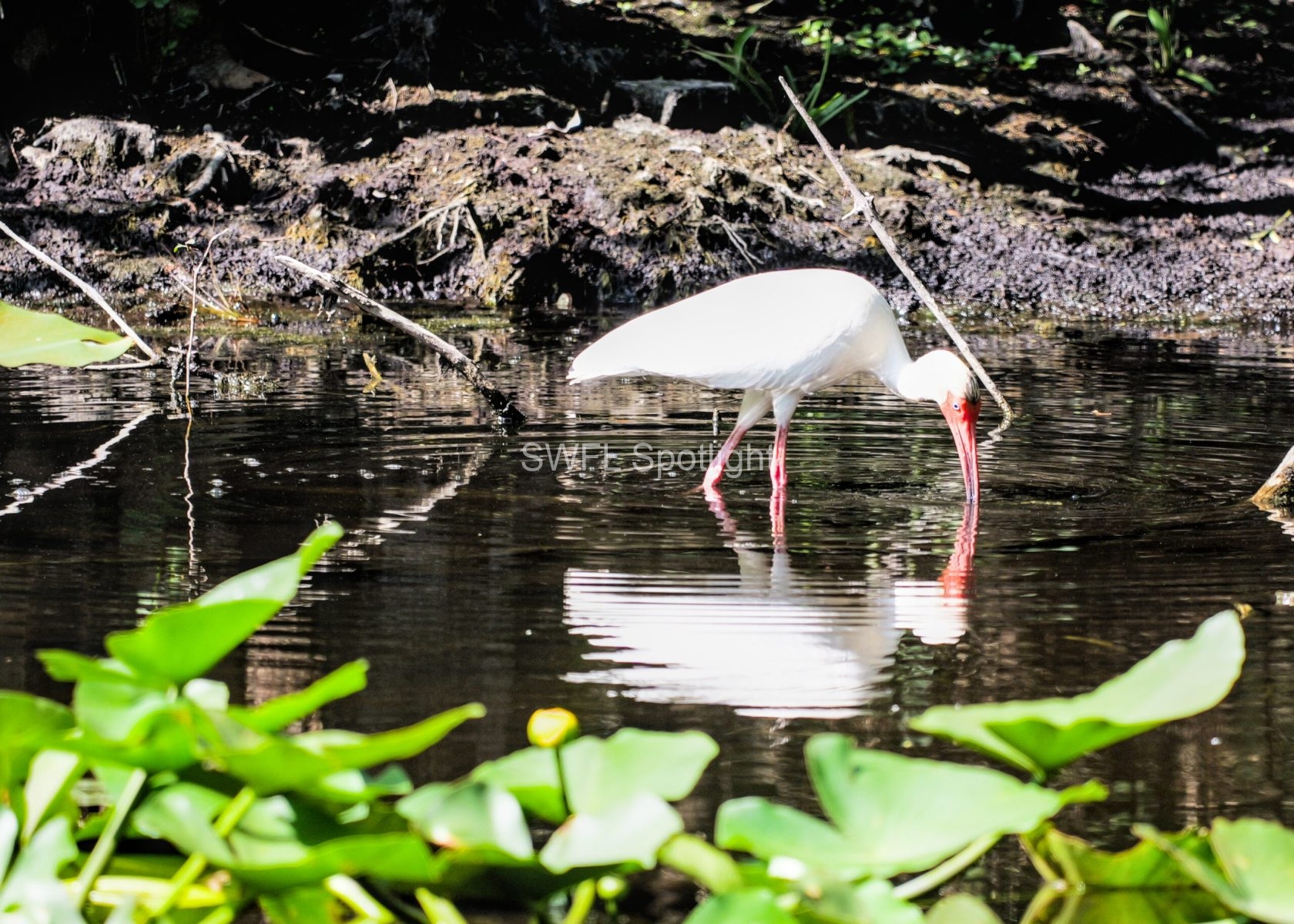
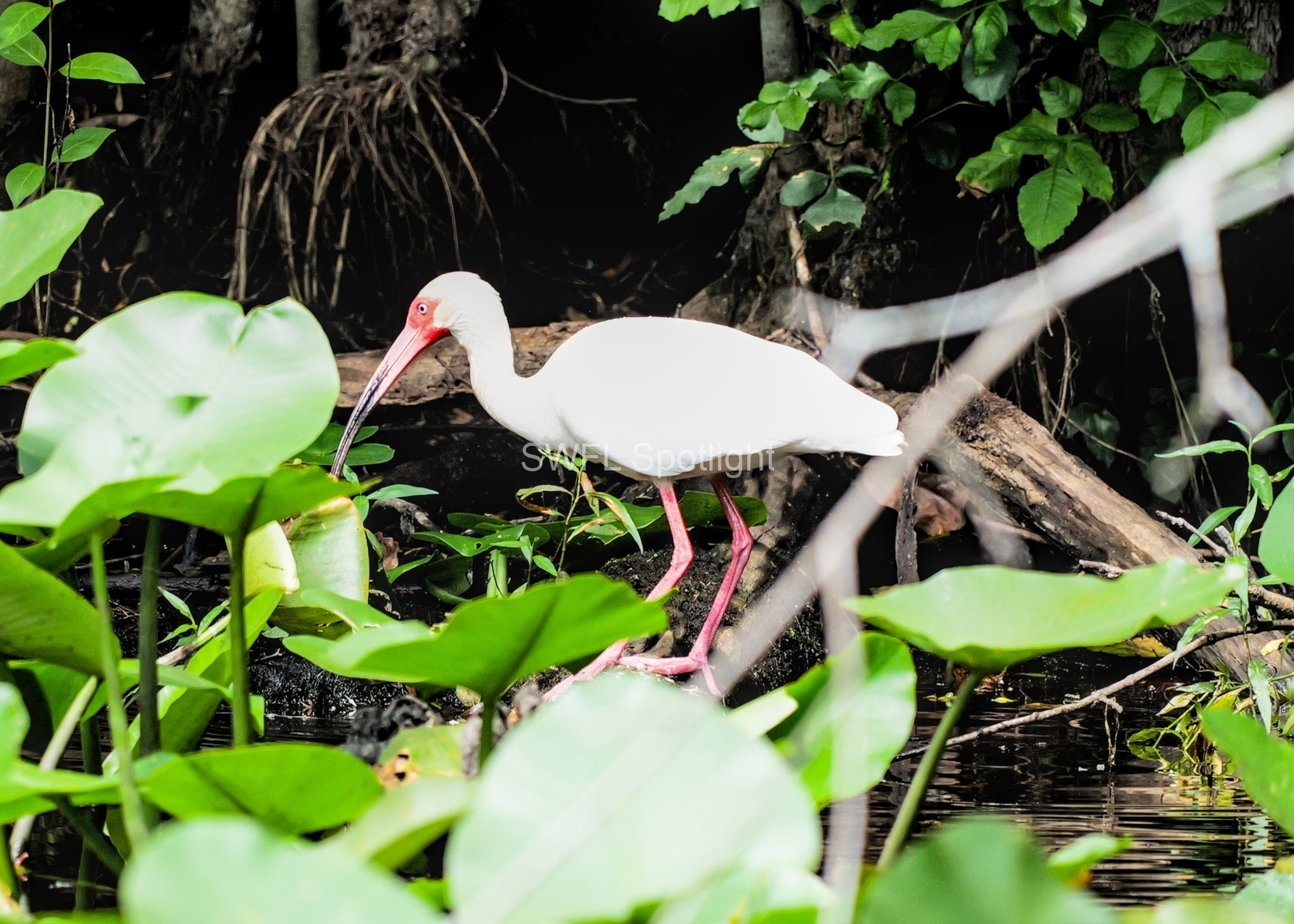
The first wading bird we noticed is the white ibis, because there is almost always one nearby and they are unmistakable: snowy white plumage, a downcurved orange-red bill, pink legs, and a face that looks like it’s been dipped in coral. Ibises are among the most numerous wading birds in Florida, and they forage by sweeping that curved bill side to side through the shallows, probing for worms, snails, crawfish, and small frogs.
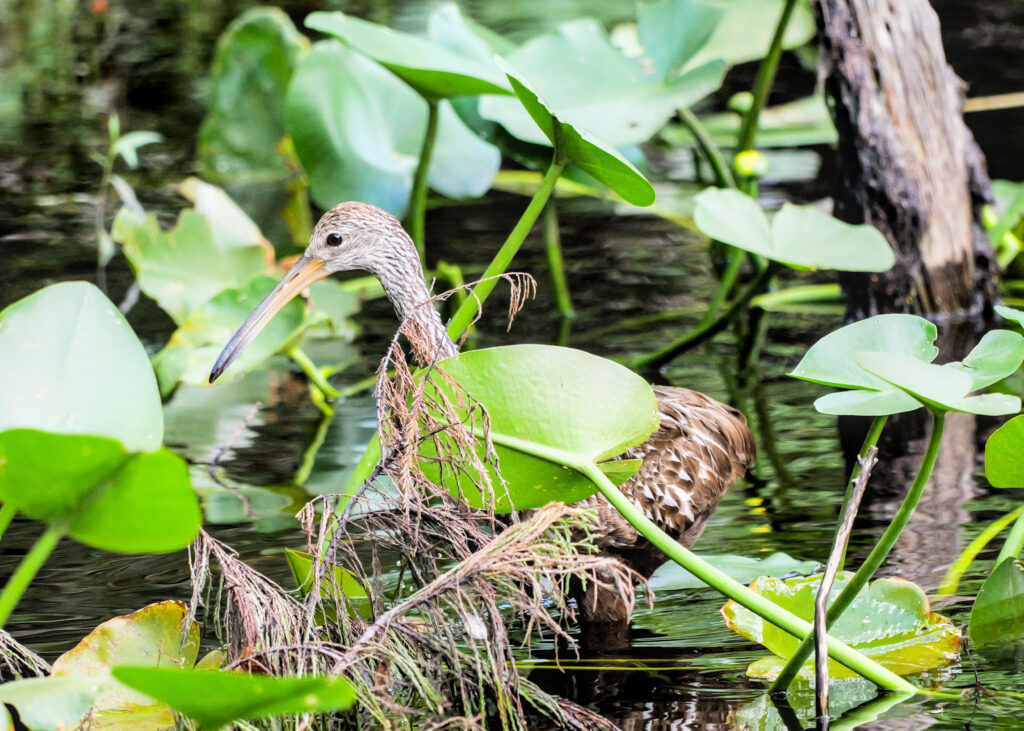
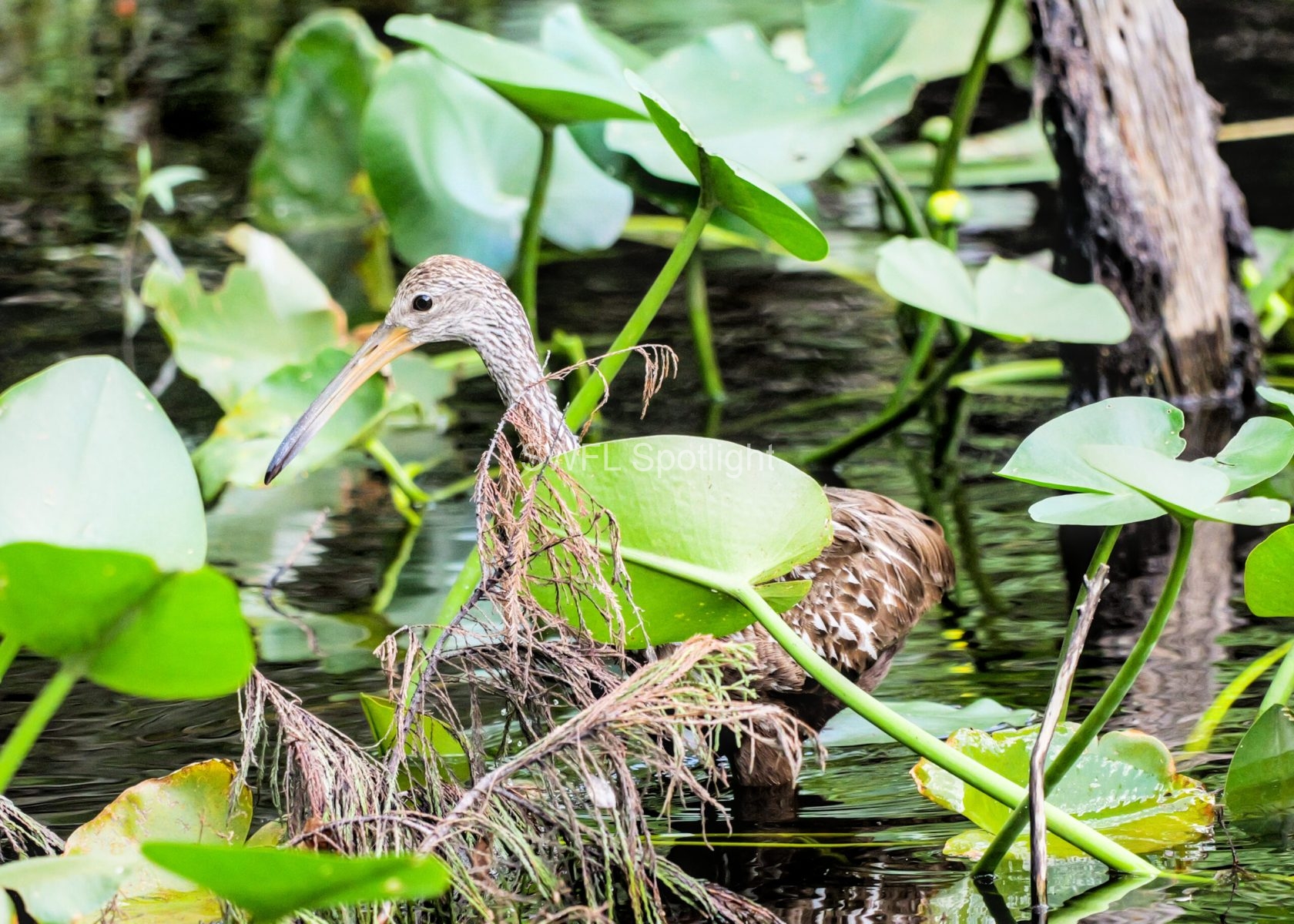
A little further along, in a pocket of nuphar lily where the boardwalk bends, we spot a limpkin. They’re streaky brown, about the size of a small heron, with a long slightly-downcurved bill that has a tweezers-like tip evolved for one job: prying apple snails out of their shells. Limpkins are a Florida wetland signature species — wherever there are apple snails, there are limpkins, and Six Mile is reliable habitat for both. If you hear a loud, mournful, almost-human wail echo through the cypress, that’s them. Audubon birders have called the sound of several males calling at once “one of the weirdest cacophonies of nature.”
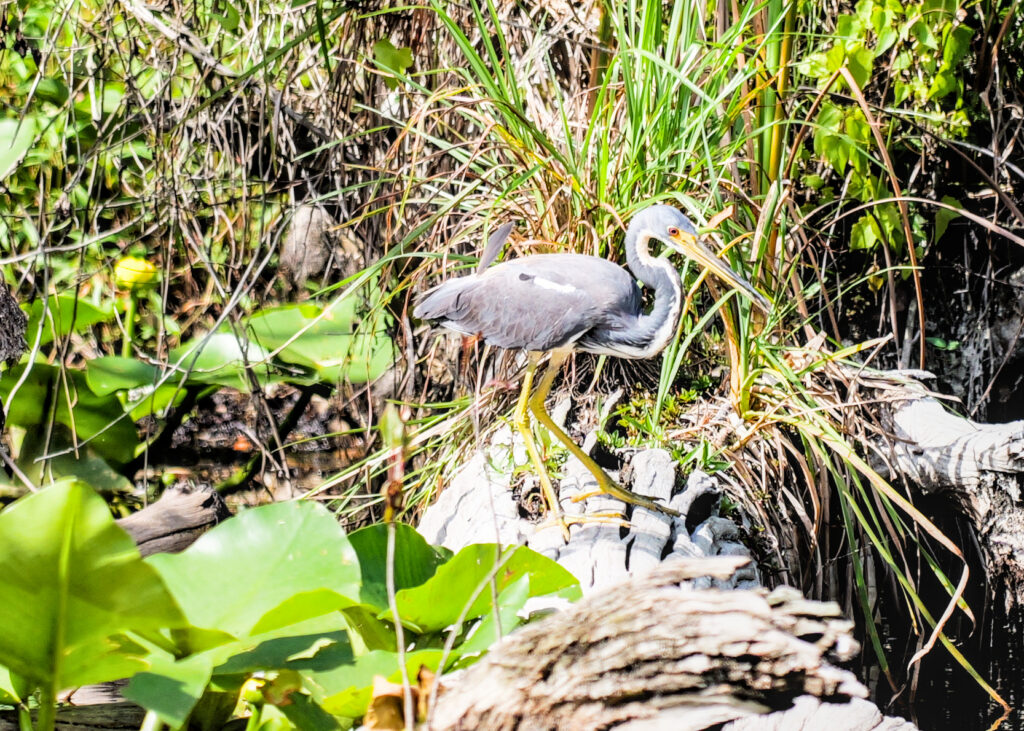
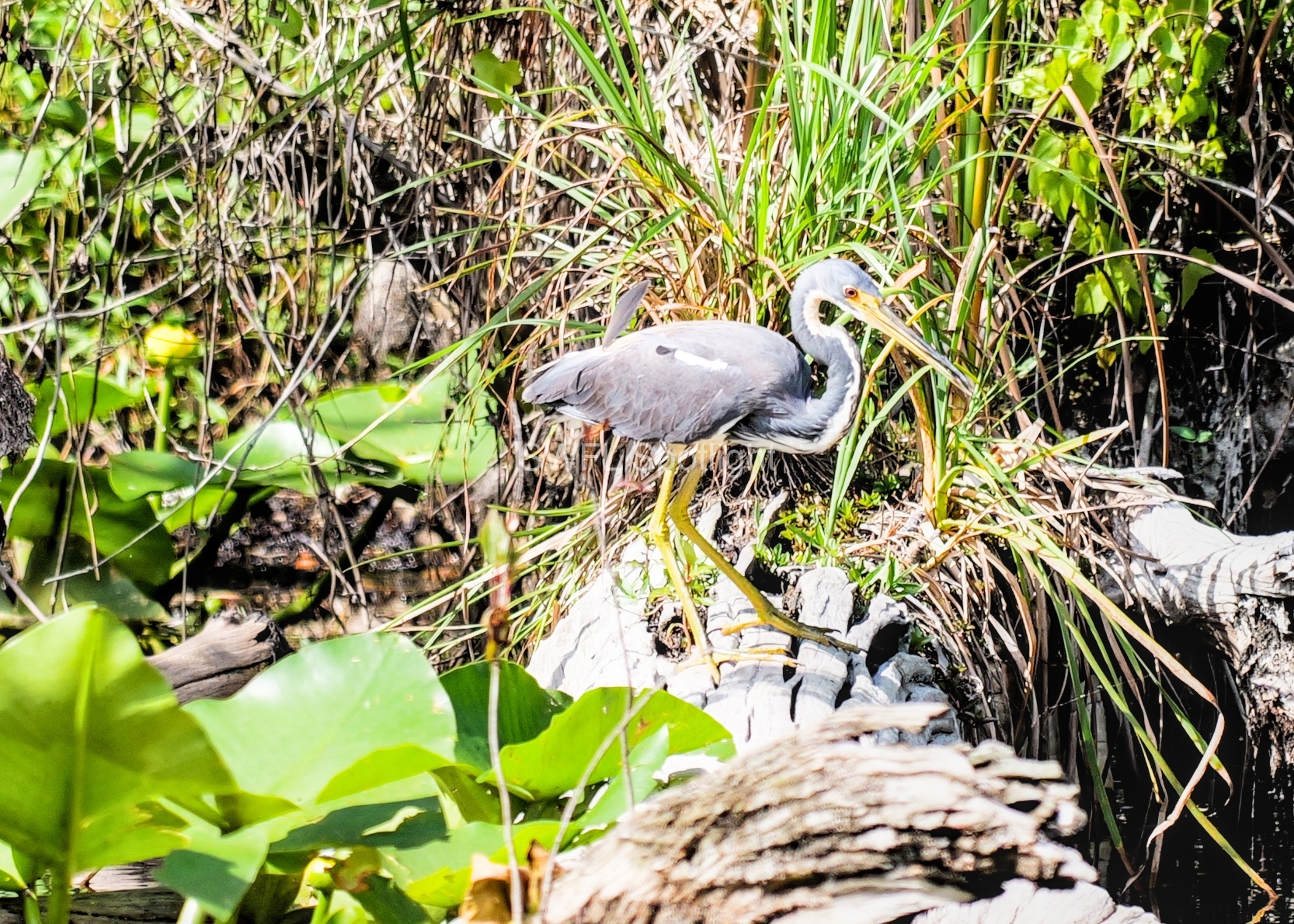
The herons and egrets work the same water on different shifts. A tricolored heron — slate-blue upper body, white belly, yellow legs — is the patient stalker, often hunting belly-deep at the edge of a tangle. Studies have clocked tricolored herons at roughly a 70% strike success rate, which is freakishly good for a bird that mostly stands still and waits.
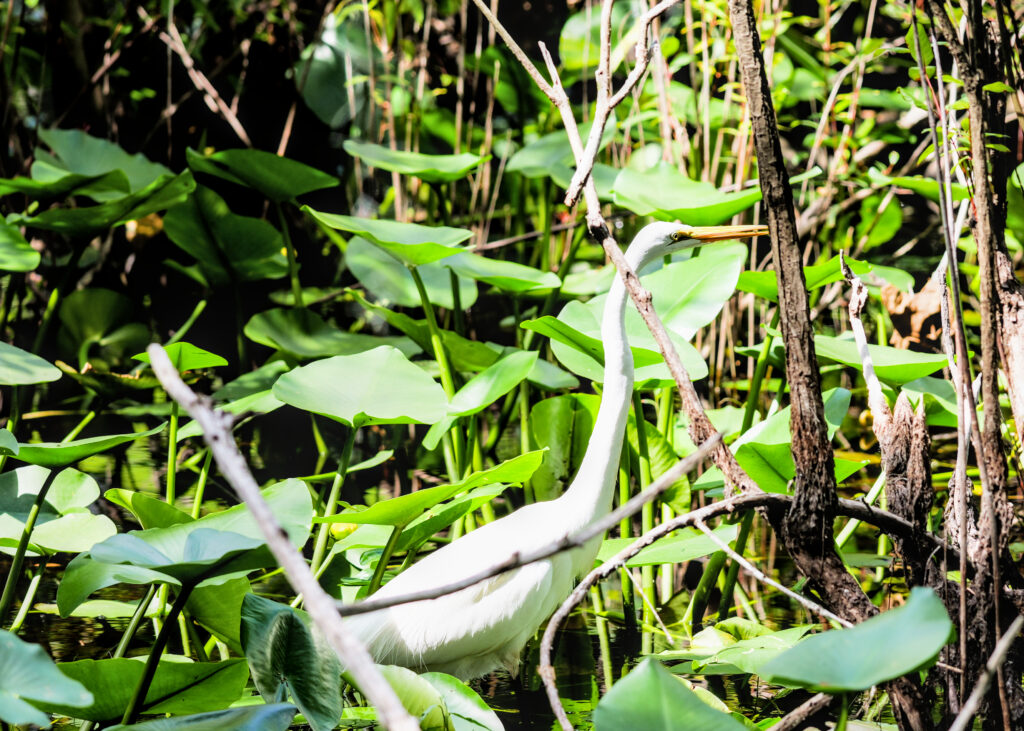
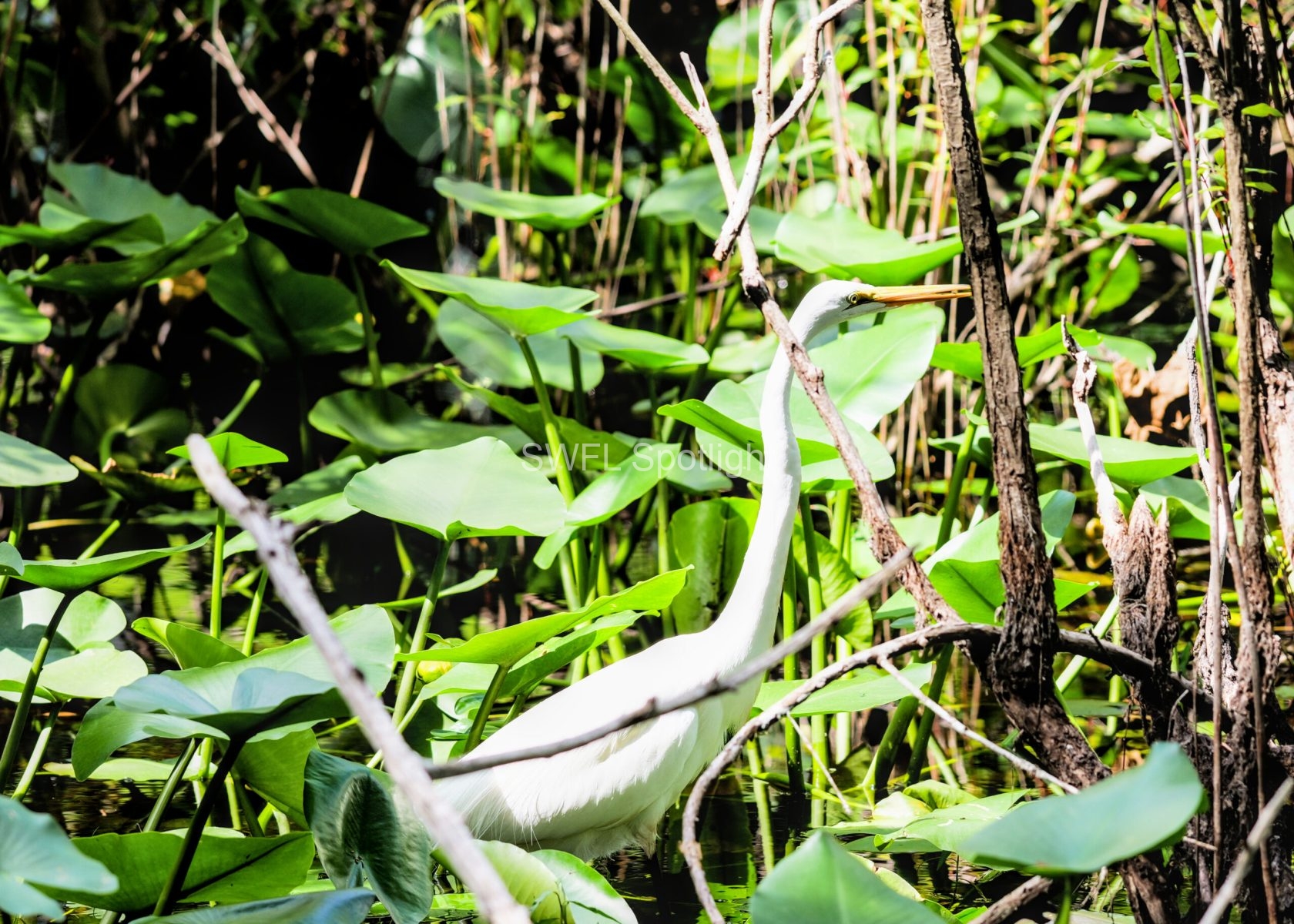
A great egret drifts past the lily pads on the opposite bank, all white feathers and that long S-curve neck folded for the strike.
Section 03 — The Small Things You’d Otherwise Miss
Look up. Look down. Look at what’s blooming.
The big birds are the obvious payoff. The smaller payoffs are everywhere, and they’re the ones that prove the Thoreau sign right.
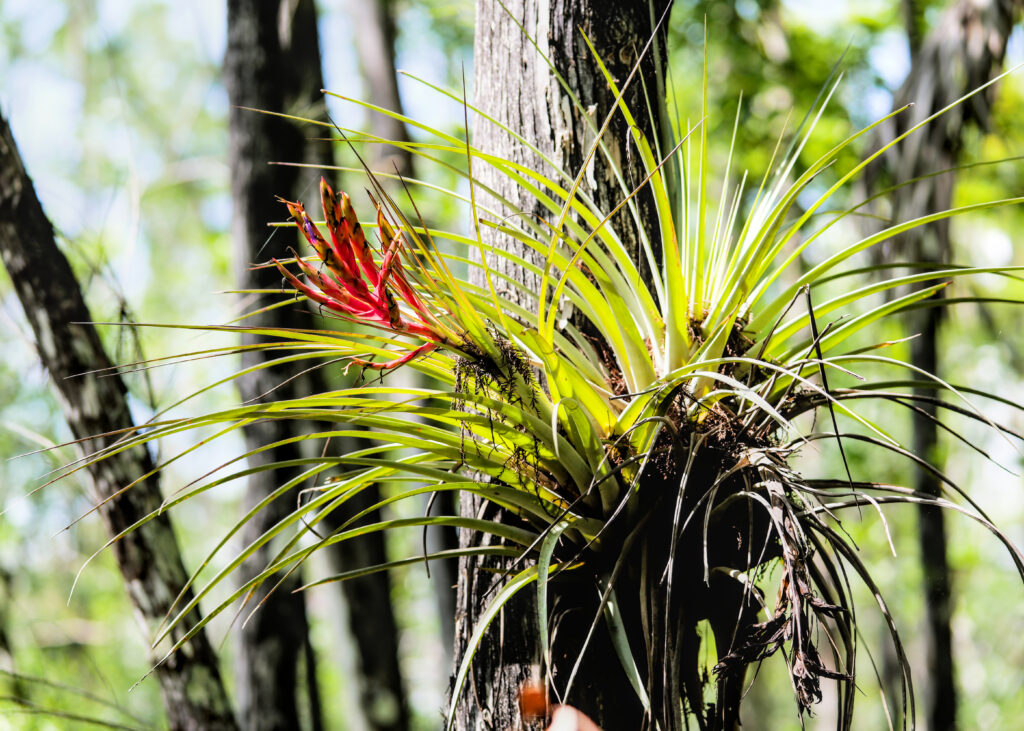
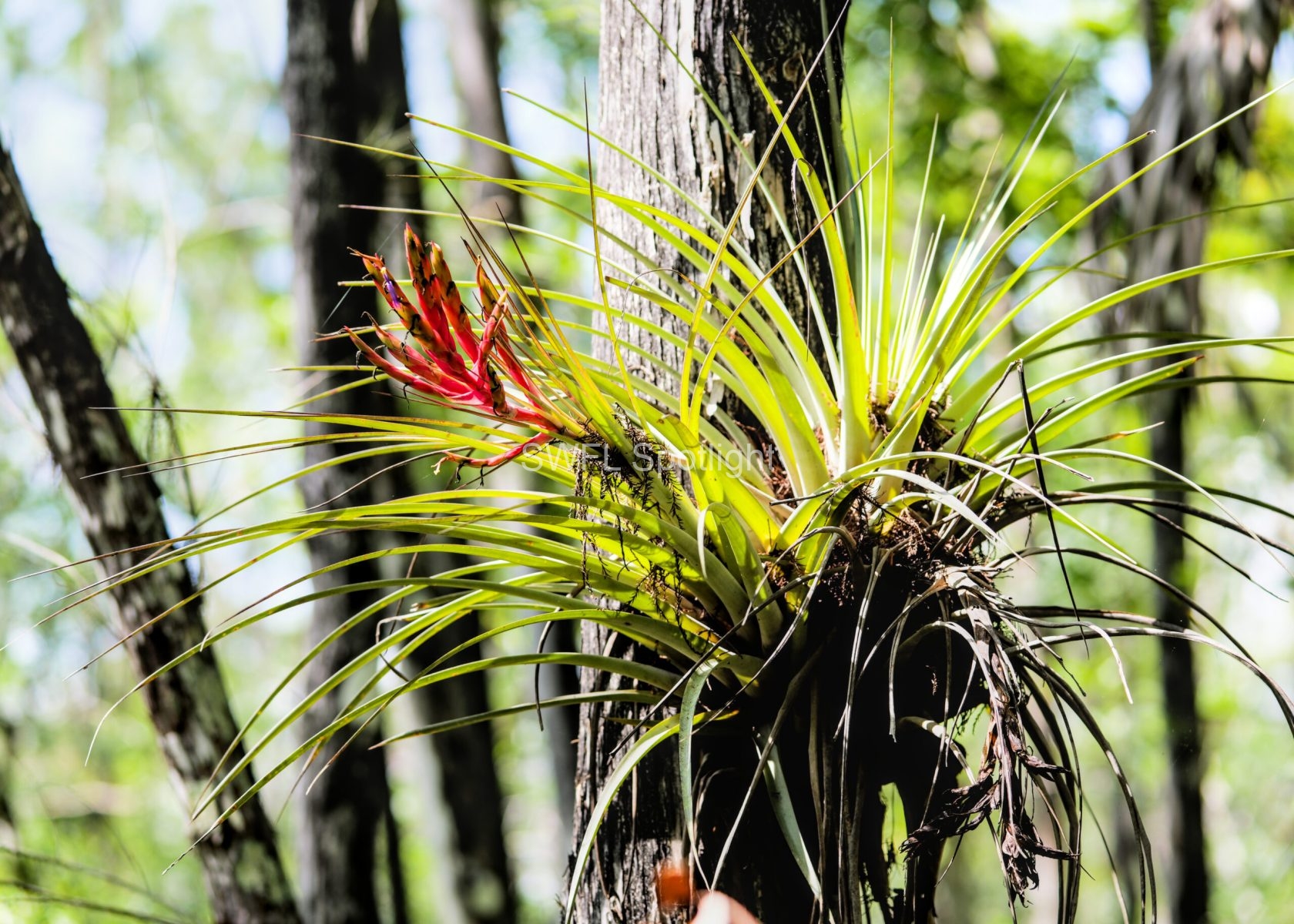
Look up into the cypress and you’ll see cardinal airplants — Tillandsia fasciculata — clinging to trunks and branches. They’re epiphytes, not parasites; they pull moisture and nutrients straight from the humid air through tiny silver hairs on their leaves. The bright red bract is the inflorescence, a flag for hummingbirds. Cardinal airplants are listed as threatened in Florida, partly because of an introduced weevil, so seeing a healthy one is a small good thing.
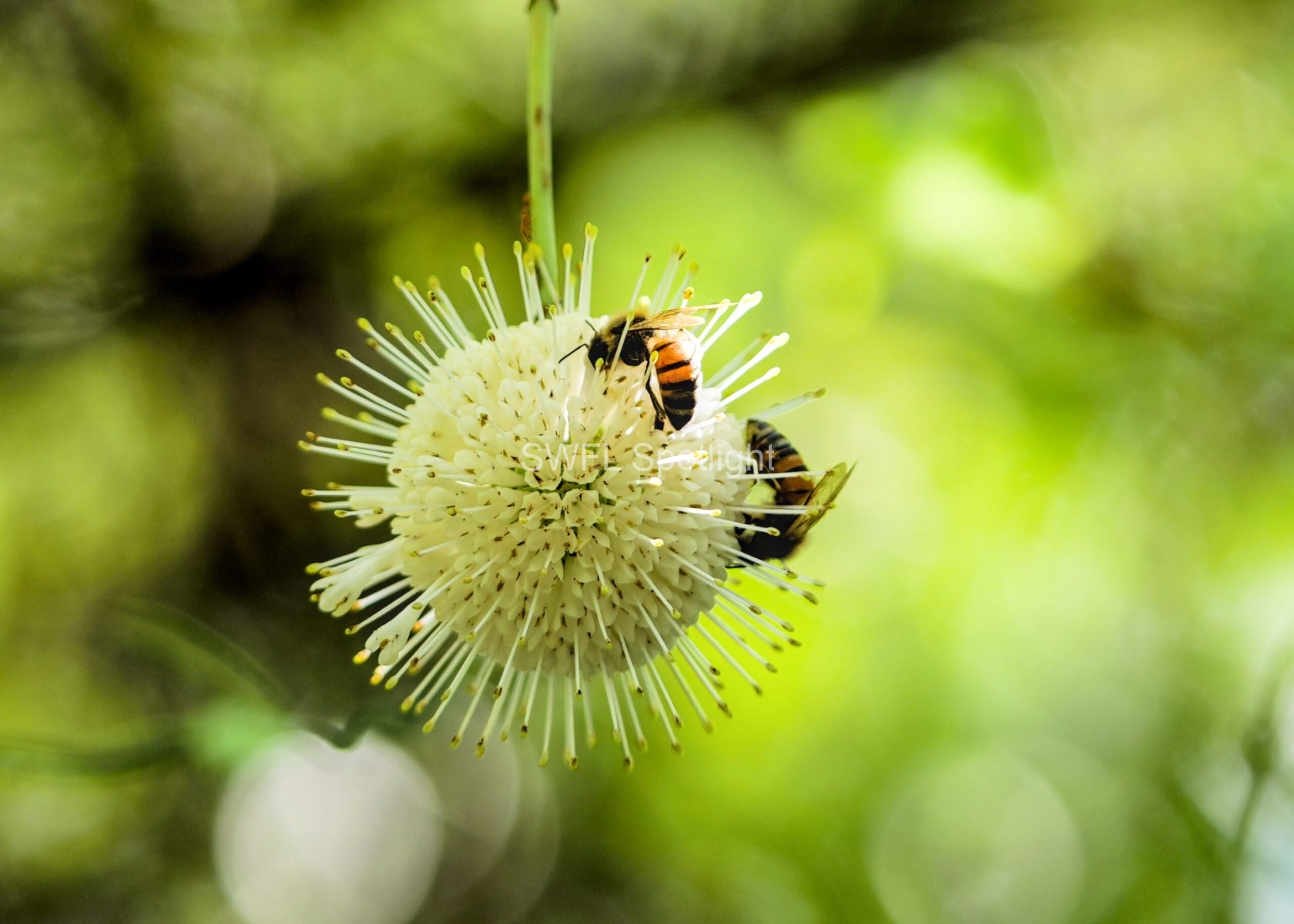
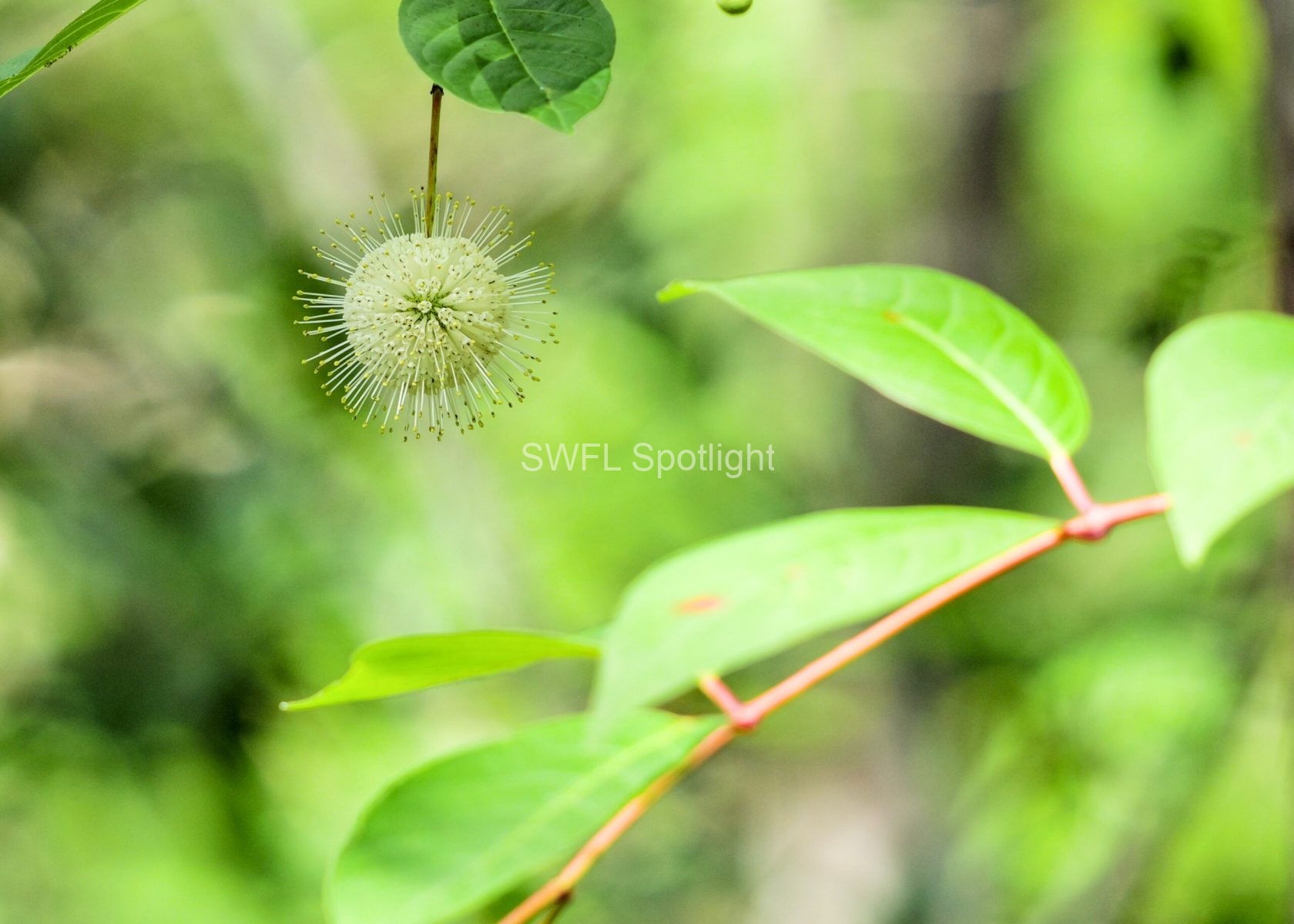
Look down or to the side and you’ll find buttonbush, a wetland shrub with a flower built like a small white sea urchin. Each globe is dozens of tiny tubular flowers fused into a sphere, and in summer they are pollinator magnets — bees, butterflies, moths, hummingbirds.
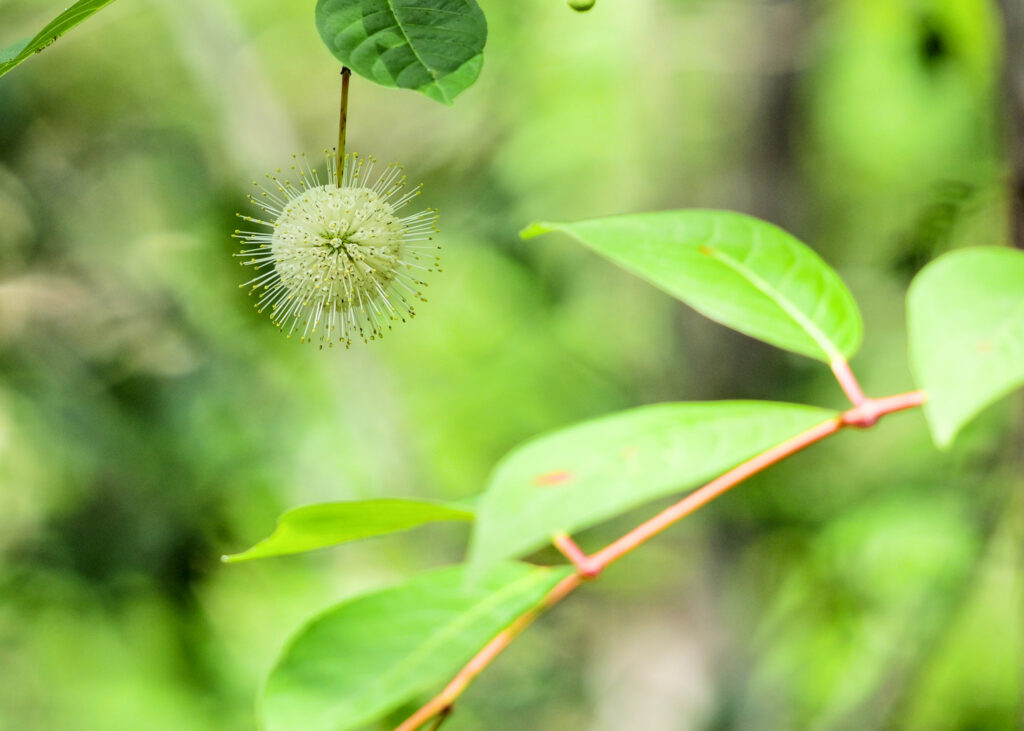
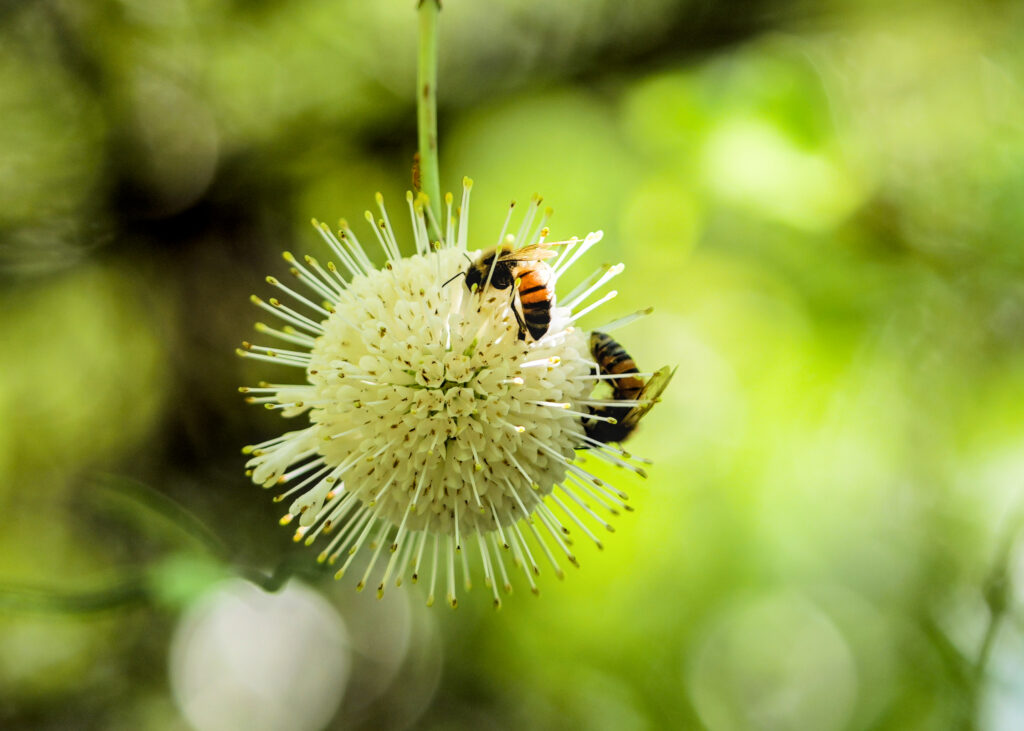
Stand still on a boardwalk plank for thirty seconds and the woods stop hiding from you.
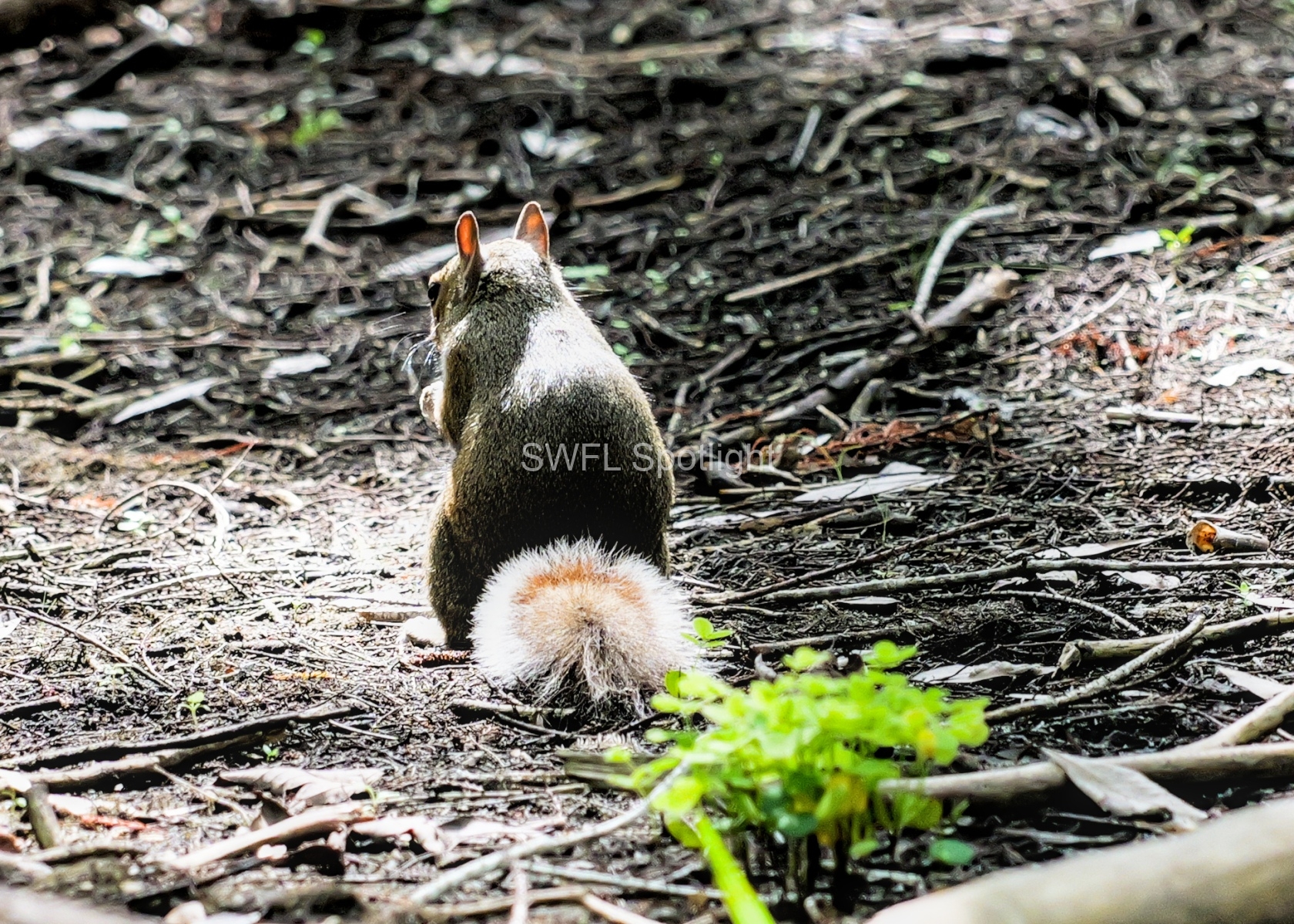
And then there’s the moment a gray squirrel sits up in the leaf litter just off the boardwalk, working a seed in its paws, tail backlit and glowing. He doesn’t know you’re there. He doesn’t care. You get a clean three seconds of unobserved squirrel before he hops off, and that small unguarded moment is the whole reason you came.
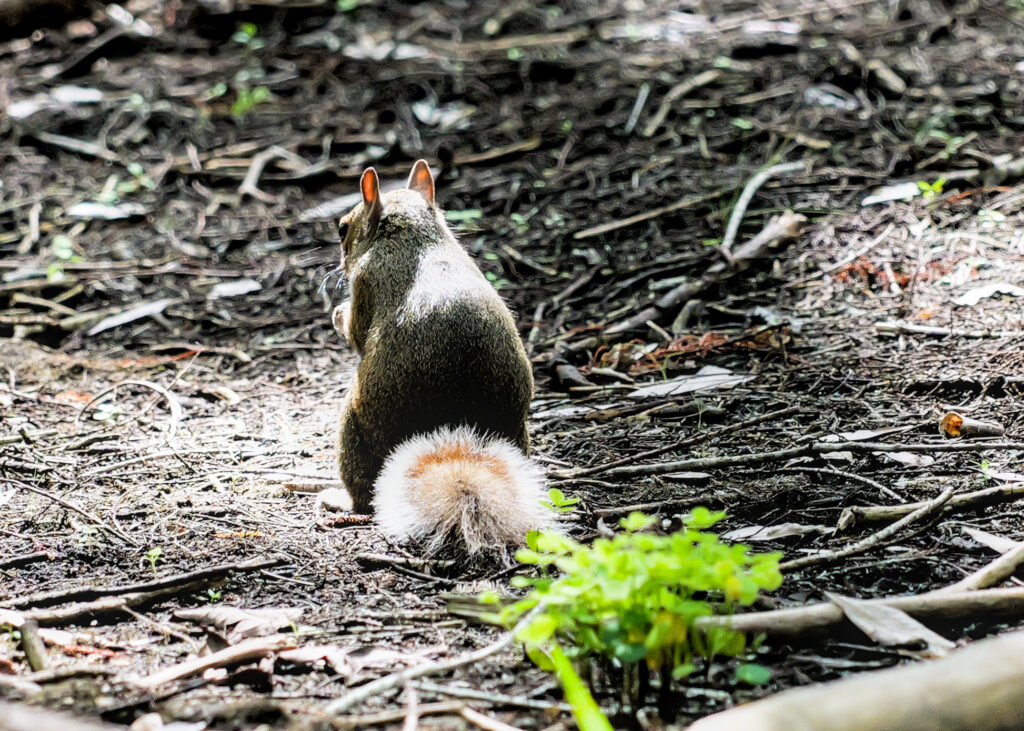
That is what the slough trades you for the price of slowing down.
Photo Gallery
See something you like? Browse the full gallery below — digital downloads are available as watermark-free images.
Under the Sun · Field Notes
Why a boardwalk earns the same series space as a beach.
The slough isn’t coastal, but it’s the same ritual: get outside, slow down, let SWFL do its thing. Under the Sun isn’t really about the coast — it’s about the shape of an outdoor afternoon here. The causeway, the slough, the back-bay paddle, the sunrise walk — different ecosystems, same instinct.
The Six Mile boardwalk gives you the unhurried version of that instinct. A mile and change of cypress strand, no rush, no fee, no agenda but the one the herons hand you. No mosquitos either. The slough is home to a small fish that loves to eat mosquito larvae.
The slough is what happens when a community decides a place is worth keeping quiet.
We came in around 9 a.m., parked easy, and were back at the car a little over two hours later with cards full of birds, bees, and one excellent backlit squirrel tail. That’s the trip. Bring water, bring a long lens if you have one, and don’t forget to stop at the sign.
— The SWFL Spotlight crew
Stay in the Loop
Get more SWFL stories and event photos in your inbox.
Sources
- Six Mile Cypress Slough Preserve — Lee County Parks
- Six Mile Cypress Slough Preserve — Wikipedia
- The Preserve — Friends of the Slough
- Six Mile Cypress Slough Preserve — Florida Birding Trail
- Boardwalk Trail Guide — Lee County Parks (PDF)
- Limpkin — Cornell Lab of Ornithology
- Limpkin — FWC Species Profile
- White Ibis — Audubon Field Guide
- Tricolored Heron — FWC Species Profile
- Tricolored Heron — Audubon Field Guide
- Cardinal Airplant — Marie Selby Botanical Gardens
- Florida’s Native Bromeliads — UF/IFAS Gardening Solutions
- Buttonbush — Florida Wildflower Foundation
- Buttonbush — UF/IFAS Gardening Solutions